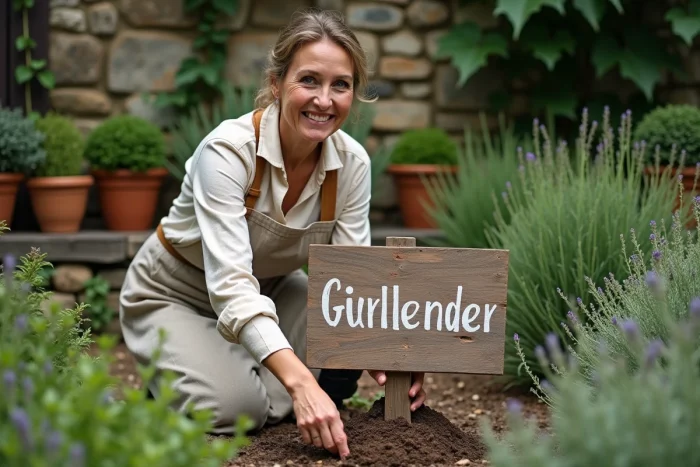
A garden name refers to the word or group of words assigned to a cultivated space to distinguish it, locate it, or give it an identity. This practice, common in shared gardens and rural properties, also applies to small urban gardens. Naming a small garden grants it a status of its own, even when it is limited to a few square meters of greenery.
Language register and sound of the garden name
Before looking for a theme or a reference, the first question concerns the language register. A Latin name like “Hortus” evokes a scholarly and botanical tradition. An affectionate diminutive (“Le Petit Clos”, “Mon Lopin”) establishes an intimate relationship with the space. The chosen register shapes the entire perception of the place.
The sound is as important as the meaning. A short name, with open vowels (“La Clairière”, “L’Oasis”), is easier to remember than a long phrase. Test your name out loud: a good garden name is pronounced without hesitation and written without ambiguity.
To explore garden name ideas on Une Fleur Un Jardin, the proposed approach helps structure this reflection based on the size and character of your outdoor space.
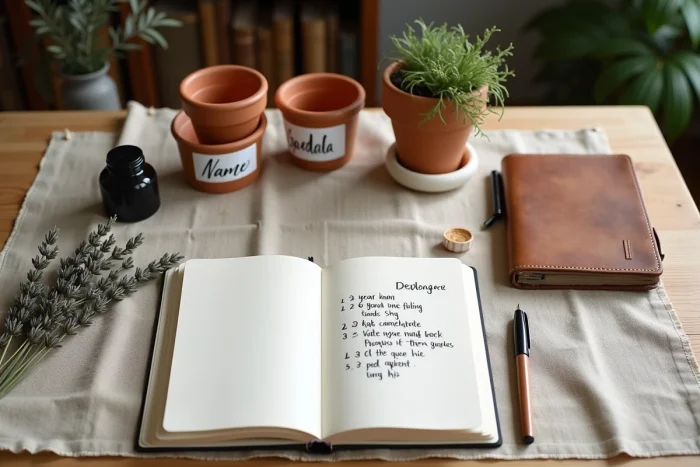
Small garden names: three categories that work
Not all garden names are created equal. Some age poorly, while others remain relevant even when the plantings change. Three main categories stand out for their durability over time.
Names related to place or history
Diving into local geography or history produces rooted names. The name of an old cadastral plot, a vanished path, or a past use of the land provides a depth that imagination alone cannot offer. “Le Clos du Lavoir”, “Le Jardin de la Venelle”: a name tied to the history of the land withstands the test of time.
This approach works particularly well for old houses or gardens located in neighborhoods with identifiable heritage.
Names inspired by a dominant plant
Naming your garden after the plant that characterizes it remains a reliable method. “Le Jardin aux Hortensias”, “Le Carré de Lavande”: the visitor knows what to expect. The risk is having to rename the space if the plant disappears. To avoid this pitfall, prefer a perennial species or a well-established tree.
Names of atmosphere or sensation
“Le Jardin Suspendu”, “Le Refuge Vert”, “La Pause”: these names describe an experience rather than a plant content. An atmospheric name adapts even when the plantings evolve. This category is suitable for small gardens whose layout changes often with the seasons.
Adapting the name to the size and use of the garden
A small garden does not have the same constraints as a park. The name must reflect the scale without betraying it. Calling a vegetated balcony “Le Domaine” creates a mismatch that may be amusing, but loses coherence over time.
The actual use of the garden also guides the choice. A space dedicated to vegetable gardening supports a concrete name (“Le Potager du Muret”). A relaxation area calls for a more evocative name (“L’Abri des Glycines”). Here are the criteria to check before settling on a name:
- The actual size of the garden: a modest name for a modest space avoids the effect of unintended mismatch
- The main function: vegetable production, floral enhancement, relaxation space, children’s play area
- The visibility of the name: will it be displayed on a plaque, engraved on a stone, or remain an oral name within the family
- The durability: does the name remain relevant if you replace the roses with grasses in three years
Common mistakes in choosing a garden name
Some names seem appealing on paper but pose concrete problems. Too long names naturally shorten with use, often resulting in a diminutive you hadn’t planned. “Le Petit Jardin Secret de Grand-Mère Marguerite” will become “Marguerite’s garden” in a few weeks.
Another pitfall: overly specific cultural references. A name drawn from a novel or movie you love may leave anyone who doesn’t share that reference perplexed. Prefer names whose meaning remains accessible without explanation.
The last pitfall concerns names in foreign languages. A Japanese or English term may sound elegant, but it must remain pronounceable by those who frequent the garden. A name that no one uses because it is too complicated eventually fades away.
Formalizing and displaying the name of your small garden
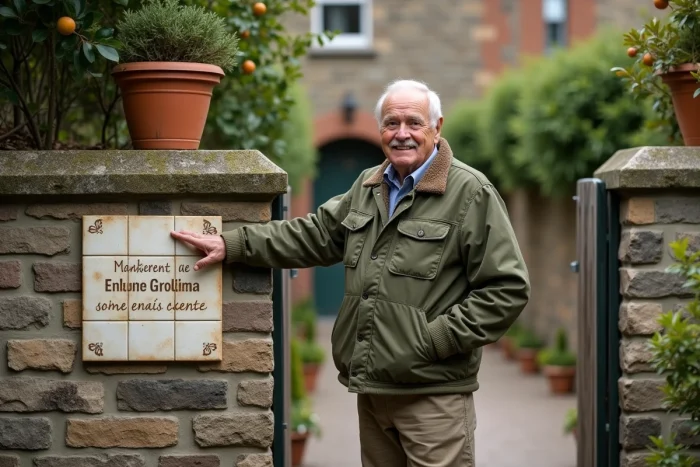
Once the name is chosen, the question of the medium arises. The name can remain purely oral, passed between the inhabitants of the house. But displaying it on a plaque, slate, or wooden sign transforms a private use into a visible design element.
For shared or collective gardens, the name serves a practical function. It acts as a reference in exchanges between neighbors, in meeting minutes, or in requests to the community. In this context, a clear and short name facilitates communication.
The materials of the medium deserve consideration:
- Engraved slate withstands the elements and ages well, suitable for characterful gardens
- Painted wood offers a warm appearance but requires regular maintenance
- Terracotta or glazed ceramic fits into a Mediterranean garden or a vegetable garden
The choice of medium extends the identity created by the name. An industrial plastic sign would contradict the spirit of a garden named “Le Clos aux Figuiers”.
Naming a small garden requires neither a budget nor administrative formalities. The most lasting name is the one that describes what you feel in that space, with simple words that you will enjoy repeating each season.