Blood sugar at 70 is not assessed in the same way as it is in a 40-year-old adult. Reference ranges change, treatment targets do too, and how blood glucose is monitored depends as much on overall health as on chronological age. Understanding what a blood test measures, knowing which values to expect, and choosing a suitable monitoring tool can help avoid two opposite pitfalls: neglect and excessive monitoring.
Fasting and post-meal blood sugar at 70: reference values
In adults with no known health conditions, fasting blood sugar is usually between 0.70 and 1.10 g/L. After a meal, it may rise but should not exceed 1.40 g/L.
For people aged 70, several medical sources indicate that the normal fasting range may be wider, generally between 0.8 and 1.3 g/L. This broader range takes into account age-related changes in the pancreas and the gradual decline in insulin sensitivity.
| Measurement | Adult (general reference) | Person aged 70 |
|---|---|---|
| Fasting blood sugar | 0.70 – 1.10 g/L | 0.80 – 1.30 g/L |
| Post-meal blood sugar (2 hours after a meal) | Below 1.40 g/L | May reach 1.80 g/L |
| Fasting hyperglycemia threshold | Above 1.10 g/L | Above 1.30 g/L (depending on individual profile) |
A one-off reading above these values does not automatically mean diabetes, but it does warrant a medical appointment for further tests, including a glycated hemoglobin (HbA1c) test.
For more information on these reference values, normal blood sugar levels at age 70 are covered in a detailed analysis that usefully complements this information.
HbA1c after 70: why the target varies by individual profile
Glycated hemoglobin reflects average blood glucose levels over approximately three months. It is a more stable indicator than a one-off blood sugar reading and is less affected by fluctuations related to meals or the stress of having blood drawn.
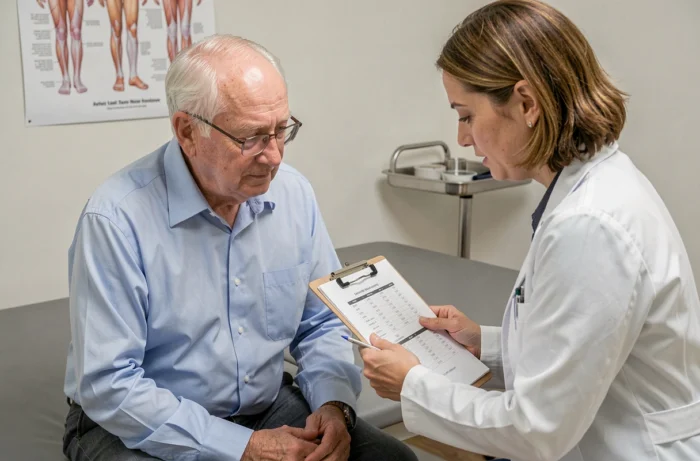
The French National Authority for Health (HAS) recommendations published in May 2024 do not set a single target for people aged 70. Instead, they distinguish between three profiles:
- Robust older adults with no major comorbidities, for whom the HbA1c target may remain close to that of a younger adult.
- Frail people (cognitive impairment, multiple medications, risk of falls), for whom the target is relaxed to reduce the risk of hypoglycemia.
- People who are dependent on others, for whom the main goal is to prevent hypoglycemic episodes rather than to achieve low blood sugar.
This graduated approach means that an HbA1c level considered satisfactory for an active 70-year-old may be too strict for someone of the same age with several health conditions. The target should be agreed with the primary care doctor, not taken from a standard chart.
Blood sugar monitoring tools suited to older adults
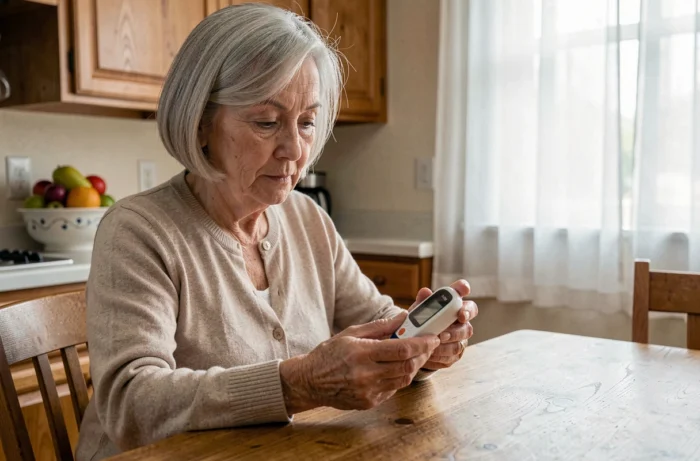
Not every older adult with type 2 diabetes needs to check their blood sugar with a finger prick every day. Daily finger-stick testing is mainly warranted when treatment includes insulin or medications that can cause hypoglycemia (sulfonylureas, glinides). For other treatments, the frequency of testing should serve a specific clinical purpose agreed on with the care team.
Finger-stick blood glucose meter
This is the most widely used tool. A small lancet pricks the fingertip, and a test strip inserted into the meter displays the result within seconds. Its advantages include a moderate cost and ease of use.
One drawback for older adults is that handling test strips and lancets requires dexterity, which can be difficult for people with arthritis or vision problems. The result is also just a snapshot, with no information about trends.
Continuous glucose monitors
Worn on the arm, these devices measure glucose in the interstitial fluid every few minutes. They reveal trends that finger-stick testing cannot capture, such as nighttime spikes, drops between meals, and changes after physical activity.
Their benefits are documented for people at high risk of hypoglycemia. They are not useful for everyone: a continuous glucose monitor only makes sense if the patient or their caregiver uses the data it generates. The actual benefit depends on being able to interpret the graphs or share the readings with a doctor.
Laboratory blood tests
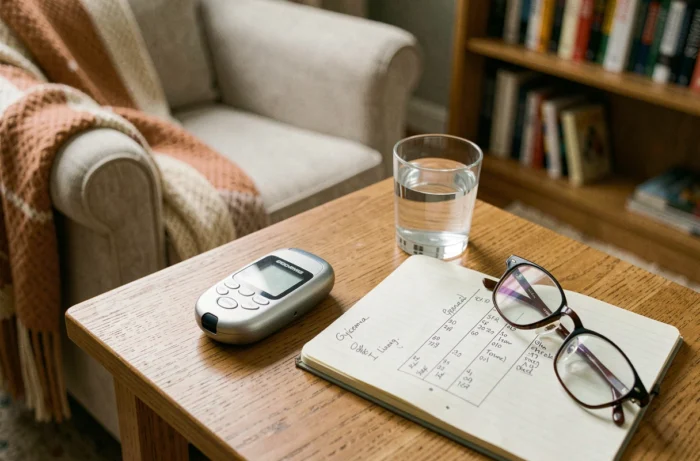
Blood tests remain the foundation of monitoring. They include fasting blood sugar and, for people with diabetes, HbA1c. The usual frequency is two to four times a year, depending on how stable the diabetes is and the treatment being used.
Hypoglycemia in older adults: an underestimated risk
Most articles about blood sugar after 70 focus on hyperglycemia. Hypoglycemic episodes deserve at least as much attention. In older adults, hypoglycemia can cause falls, confusion or loss of consciousness, sometimes with serious consequences (hip fracture, prolonged hospitalization).
Classic symptoms such as trembling, sweating and hunger are often less pronounced with age. Some people feel nothing until the episode has become severe, making it harder to detect without testing.
This risk explains why HAS recommendations favor less stringent blood sugar control for frail or dependent older adults. Preventing hypoglycemia may take priority over achieving very low blood sugar. A treatment that causes nighttime falls due to hypoglycemia is not meeting its goal, even if average blood sugar readings look acceptable on paper.
When blood sugar at 70 warrants prompt medical attention
Some situations call for medical advice without waiting for the next scheduled check-up:
- Fasting blood sugar that is regularly above 1.30 g/L across several consecutive readings.
- Symptoms suggesting prolonged hyperglycemia: intense thirst, frequent urination, unusual fatigue, blurred vision.
- A severe hypoglycemic episode (confusion, faintness, loss of consciousness), even if it happens only once.
- Unexplained weight loss accompanied by unstable blood sugar levels.
The primary care doctor is the first person to contact. They can adjust treatment, change the HbA1c target or refer the patient to an endocrinologist if the diabetes proves difficult to control.
Managing blood sugar after 70 involves using numerical reference points, but above all, it requires personalized monitoring. The thresholds in the table are no substitute for talking with a doctor, and even the most sophisticated monitoring tool is only valuable when it is part of a care plan that takes overall health into account.