An unusual romantic weekend in PACA is not just about a night in a guesthouse with a view of lavender. The Provence-Alpes-Côte d’Azur region is home to micro-territories where geology, isolation, and forgotten heritage create settings that classic tours overlook. Submerged villages, rocky cirques inhabited since the Neolithic, and deserted salt flats in Camargue: these places exist, but they require knowing where to look.
Criteria for identifying a truly secret place in Provence-Alpes-Côte d’Azur
The word “secret” is overused in tourism. A location featured on all travel blogs with marked parking is no longer hidden. For a site to deserve this label in the context of a couple’s getaway, three conditions must intersect.
- Low attendance outside the summer season: the Verdon gorges attract crowds in July, but some ghost villages on their edges remain deserted even in June.
- Absence of massive tourist signage: no brown signs on the highway, no souvenir shops at the entrance.
- A visual or historical interest sufficient to justify the detour, not just an empty hamlet without particular character.
Planning an unusual romantic weekend in PACA involves crossing these criteria with the question of nearby accommodation. A beautiful site without the possibility of sleeping within a reasonable distance loses part of its appeal for a short stay.
Ghost villages and forgotten sites of the Verdon gorges
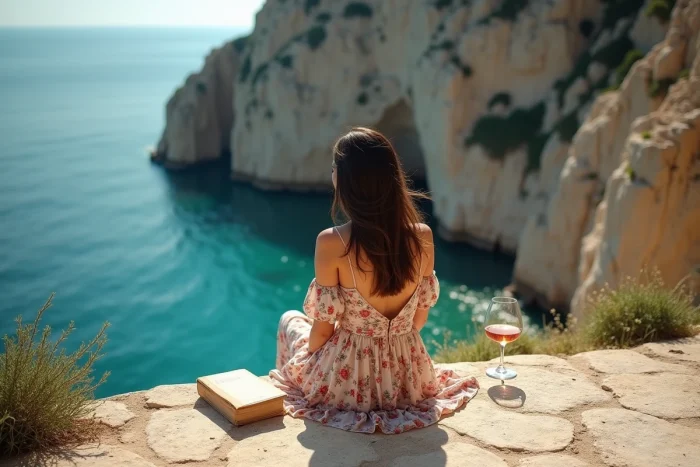
Châteauneuf-lès-Moustiers is an abandoned village accessible by a path from the gorges road. The ruins of dry stone houses and the roofless church offer a silent mineral backdrop. Most visitors to Verdon focus on Lake Sainte-Croix or the roadside viewpoints, leaving this hamlet in almost complete tranquility.
The cirque of Calès, in the Alpilles, presents another type of hidden heritage. Troglodyte dwellings carved into the limestone bear witness to ancient human occupation. Access is via an unmarked path from the village of Lamanon, which naturally filters the attendance.
Ubaye, the village beneath the waters
In the Ubaye valley, an ancient village was submerged during the filling of a dam. Depending on water levels, remnants reappear in autumn and winter. This phenomenon creates a changing landscape, between alpine nature and submerged memory, which takes on a special dimension for two.
Unusual accommodations in nature: cabins, bubbles, and troglodytes in PACA
The choice of accommodation defines the experience as much as the destination. In Provence-Alpes-Côte d’Azur, the offer of atypical accommodations has been structured around three main types.
Treehouses are concentrated in the wooded areas of the Hautes-Alpes and Var. The most developed structures include access via walkways, proper insulation, and sometimes a private spa area. The Cabanes des Grands Cépages, near Avignon, offer green-roofed cabins by a lake.
Transparent bubbles allow you to sleep under the stars without the constraints of camping. Comfort varies greatly from one provider to another: some bubbles have a silent ventilation system, while others become stifling as soon as the nighttime temperature exceeds the seasonal average.
Troglodyte houses in Var
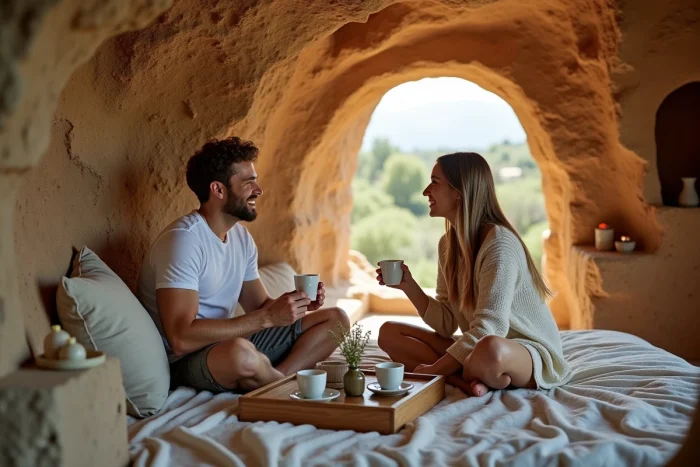
Cotignac is the reference village for Provençal troglodytism. The tuff cliff overlooking the village has been carved for centuries. Sleeping in a room carved from rock offers natural coolness in summer and a mineral atmosphere that is hard to replicate in a conventional accommodation.
Getaway in Camargue: Salin-de-Giraud off-season
Tourist Camargue often boils down to Saintes-Maries-de-la-Mer. Salin-de-Giraud, at the southeastern tip of the Rhône delta, offers a radically different landscape. Mountains of salt, pink ponds depending on the concentration of microorganisms, and an almost deserted Piémanson beach outside of summer.
This area works best between March and May or in October, when the low light colors the salt marshes and pink flamingos occupy the ponds. In the height of summer, the heat and mosquitoes complicate the experience.
Preparing the logistics
The accommodation options around Salin-de-Giraud remain limited. A few gîtes and guesthouses exist in Arles, about thirty minutes by car. Having a vehicle is essential: no public transport adequately serves this area.
Chartreuse de la Verne and the Var hinterland: silence as luxury
The Chartreuse de la Verne is located in the heart of the Maures massif, in a dense forest of cork oaks and chestnut trees. This monastery founded in the 12th century is still inhabited by a religious community, which limits visiting hours but preserves the authenticity of the place.
Access via a narrow forest road discourages tourist buses. Silence is a tangible element of the stay, not a marketing promise. For a couple looking to escape urban noise, this combination of religious heritage and forest isolation works without artifice.
From the Chartreuse, the Sillans waterfall is less than an hour’s drive away. This waterfall feeds a turquoise basin framed by Provençal vegetation. Swimming is prohibited, but the site remains photogenic and little frequented outside of summer weekends.
The PACA region hides its best assets far from the main roads. A submerged village in the Alps, a troglodyte cirque in the Alpilles, pink salt flats in Camargue: these places share a common point. They reward couples who are willing to drive twenty more minutes on a road without directional signs.