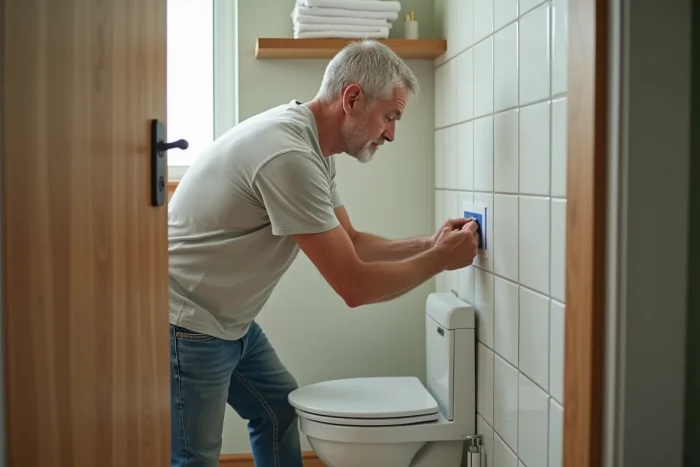
The French law imposes 35 decibels for noise from sanitary equipment in collective housing. However, in most apartments built before recent regulations, this threshold often remains theoretical. The ubiquitous drywall allows all sounds to pass through. PVC waste pipes turn even the slightest flush into a sound echo for the neighbors.
In older buildings, the proximity of living spaces amplifies the discomfort. Yet, there are concrete solutions, sometimes little known, that can effectively limit these nuisances. A few targeted interventions are enough to transform the daily experience.
Why noise in the toilet can quickly become bothersome in everyday life
In the domestic realm, the racket from the toilet is a persistent nuisance, a symptom of neglected sound insulation. The slightest flush, the sound of water in the pipes, or the impact on the tiles propagates into the adjacent room. It’s difficult to maintain discretion. Ensuring that everyone can find a space of comfort and privacy is not trivial; it is a real choice for quality of life.
The door often remains the Achilles’ heel: lightweight, it allows nearly all bothersome noises to pass through. Doubling the door with a dense panel, adding weatherstripping around the frame, or installing an acoustic door radically changes the situation. The walls also transmit the vibrations from the flush and the drainage pipes, amplifying every flow. Adding a layer of mineral wool, cork, or insulating panels absorbs and slows down sound propagation.
The floor relays every impact. A carpet, a thick rug, or PVC tiles limit resonance. The ceiling is not to be overlooked: in a building, noise also spreads upwards. Installing a false ceiling with insulating rolls creates an effective barrier. As for the pipes, they can reach 57 dB(A) during drainage. Wrapping them in acoustic foam or installing a multilayer sleeve limits these nuisances.
Achieving true acoustic comfort requires addressing every weakness. Soundproofing your toilets with ARTS Constructions is part of this approach, methodically treating the door, walls, floor, ceiling, and conduits. Tranquility is thus obtained step by step, for truly preserved moments.
Which elements to insulate to regain peace in your toilet?
Sound comfort in the toilet depends on multiple often overlooked details. The door, the first line of defense, allows even the slightest vibration to pass if it is hollow or lightweight. Reinforcing it with a dense panel and adding weatherstripping all around: these simple measures quickly slow down noise passage. If the opportunity arises, installing a complete acoustic door with a frame and seals eliminates most sound bridges.
The walls absorb and transmit sounds from the flush or drainage. Doubling the partition with glass wool, rock wool, or cork proves effective. These technical materials, known for their sound insulation performance, block the transmission of airborne and solid sounds. On the floor, adding a carpet, rug, or PVC covering cuts off the propagation of impacts and muffles noises.
The ceiling also deserves special attention. A false ceiling fitted with insulating rolls or panels limits the vertical diffusion of sounds, which is valuable in buildings where each floor amplifies nuisances. The drainage pipe often concentrates the problem. Surrounding it with an acoustic strip or installing a multilayer sleeve effectively contains the sound of water, sometimes measured at 57 dB(A).
Together, these acoustic insulation solutions form an effective barrier against unwanted noises. Each treated point brings you closer to the sought-after calm in everyday life.
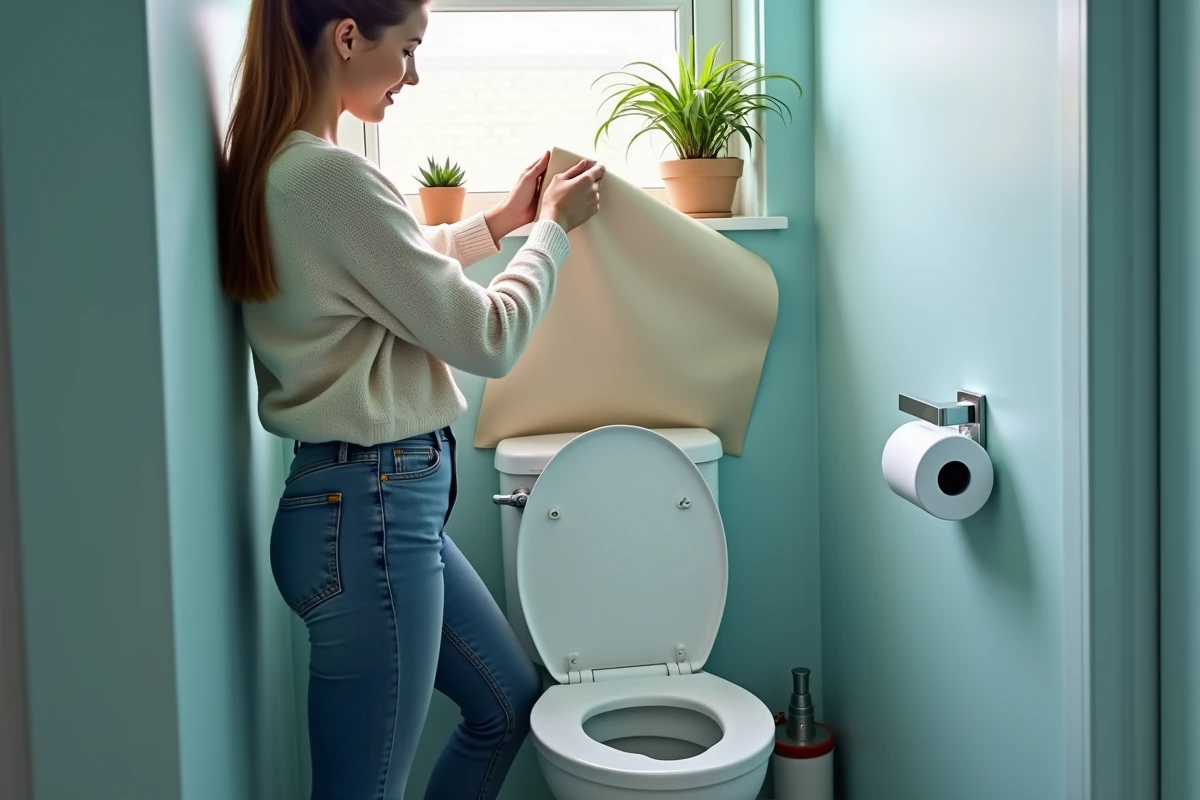
Simple tips and effective solutions for successful soundproofing
Suitable materials, precise actions
Soundproofing the toilet relies on choosing moisture-resistant materials suitable for the layout of the space. Cork, both thin and rot-proof, easily adheres to walls or partitions to absorb sounds. Rock wool or glass wool, on the other hand, find their place in the linings, around pipes, or under a false ceiling. For the door, a wood fiber panel or dense upholstery effectively slows down noise propagation.
Here are the interventions to consider for addressing the main weak points:
- Around the drainage pipes, placing an acoustic strip or a specific sleeve helps to reduce drainage noises, which can reach 57 dB(A) on PVC.
- Acoustic foam placed in ducts or around pipes cuts off vibrations transmitted by the plumbing.
- On the floor, adding a rug or carpet absorbs impacts and improves the sound ambiance.
Discreet accessories, concrete improvements
Installing a silent flush limits nuisances with each use. A pressure reducer calms whistling and overly loud drainage. Air cushions under the toilet seat or a toilet shower generate a slight background noise that masks bothersome sounds. Finally, a silent VMC ensures ventilation without turning the space into a resonating chamber.
For any intervention requiring the removal of a partition or structural modification, relying on a certified RGE professional guarantees quality and may, if applicable, provide access to public aid.
A peaceful living space sometimes starts with the most discreet room. When the door closes and the noise stays outside, the whole house breathes a little better.