
Taking a baseball bat and smashing a stack of plates in a safe environment is the principle of a rage room. In Villeurbanne, on the outskirts of Lyon, the Smash Academy has been offering this type of session for several years, with a simple observation: the controlled destruction of objects allows for the release of tension that neither sports nor meditation can always alleviate.
What smashing objects does to the body during a session
Have you ever felt the urge to slam a door or throw an object after a tough day? The rage room channels that impulse in a designated space. The act of hitting an object until its destruction engages large muscle groups (arms, shoulders, torso) and results in a real physical expenditure in just a few minutes.
What happens next is more interesting than the destruction itself. The intense effort triggers the release of endorphins, those hormones that create a sense of well-being after exercise. Heart rate increases, breathing accelerates, and then everything calms down. Several participants describe an unusual state of calm upon exiting, comparable to what one feels after a boxing session or a sprint.
The difference from a traditional sport lies in the complete absence of technique. No posture to correct, no moves to learn. The movement is instinctive, and it’s precisely this raw aspect that attracts a wide variety of profiles, including people who do not engage in any regular physical activity. To explore this experience near Lyon, the smash academy villeurbanne rage room remains a local reference for structured release.
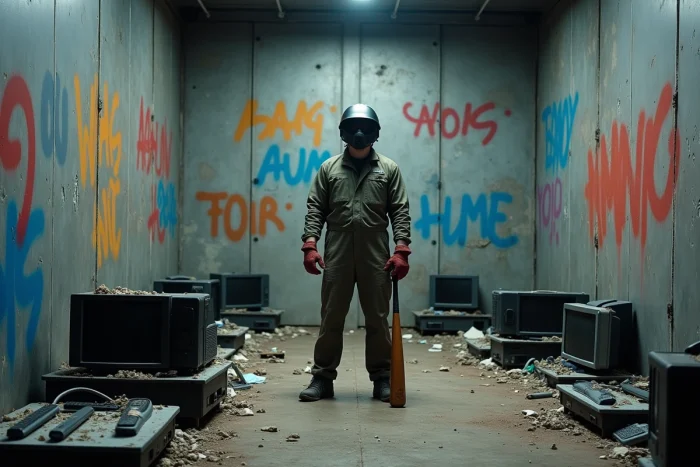
Safety equipment and supervision in the rage room in Villeurbanne
Smashing objects in a closed room is not something to improvise. The question of safety is the first criterion that distinguishes a serious rage room from a simple space filled with odds and ends. Before each session, participants don complete protective gear.
- Full-body suit and reinforced gloves to protect the skin from shards of glass and ceramic projected during impacts
- Helmet with visor, essential for the eyes and face, as fragments fly in all directions
- Closed shoes with thick soles, sometimes provided on-site, to prevent foot injuries on a floor littered with debris
Supervision goes beyond just distributing equipment. A briefing precedes each session: rules of distance between participants, striking zones, gestures to avoid. The objects provided (dishes, small appliances, screens) are selected to minimize the risks of dangerous projections. No objects containing toxic components (lithium batteries, old cathode ray tubes) are included in the lot.
This rigorous framework allows for the hosting of groups without experience, including for corporate events or sessions among friends.
Music, duration, and atmosphere: how a release session unfolds
The sound environment plays a role that beginners often underestimate. Most rage rooms, and the Smash Academy is no exception, allow participants to choose their music. From screaming metal, energetic rap, or sometimes orchestral classical: the musical choice directly influences the intensity of the release.
Why does this detail matter so much? Because the sound covers the noise of the smashing and creates a sensory bubble. The sound of breaking dishes becomes almost secondary. The participant enters a state of focused concentration on the action, the music, and the destruction. It’s this combination that makes the experience different from mere physical exercise.
The typical flow of a session
The session begins with equipment and briefing, which takes a few minutes. Then comes the actual smashing time, the duration of which varies depending on the chosen package. Participants receive a calibrated set of objects: the longer the package, the more objects there are to destroy.
The majority of participants use up their entire lot well before the allotted time ends. The intensity of the effort is surprising: hitting at full power for several consecutive minutes quickly fatigues the arms and shoulders. The body imposes its own limits, making the activity self-regulated.
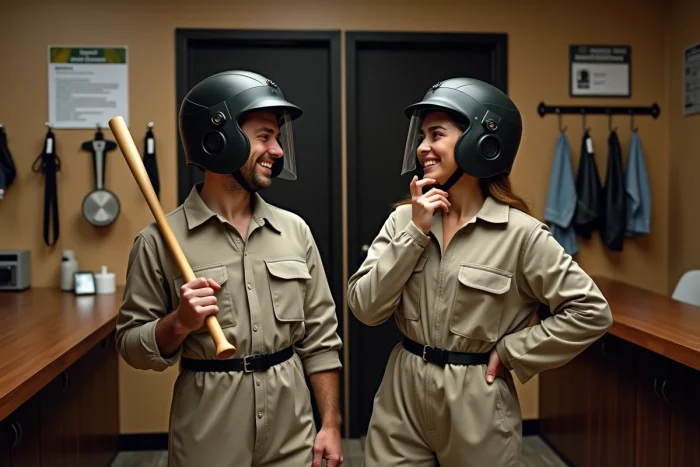
Rage room for companies: team building in Lyon that stands out
Classic corporate seminars (escape rooms, go-karting, cooking workshops) are starting to become repetitive. The rage room offers a radically different format, and it’s this contrast that appeals to team-building organizers in the Lyon metropolitan area.
The principle works well in groups for a specific reason: smashing objects together creates a bond through shared absurdity. Seeing oneself in a full-body suit, helmet on head, smashing a printer levels hierarchies. The director and the intern find themselves in the same posture, with the same hammer.
Corporate sessions often include an informal debriefing over drinks after the session. It’s in this moment of relaxation that exchanges flow much more easily than after a day of meetings in a conference room.
Managing professional stress through controlled destruction
Some companies use these sessions as a one-off tool for stress management, especially during high workload periods or after restructuring. The idea is not to replace psychological support, but to offer a space for physical and emotional decompression. Releasing stress through smashing doesn’t solve problems, but it does lower pressure enough to approach them with more perspective.
The Lyon metropolitan area has several spaces dedicated to this type of activity, but the proximity of Villeurbanne to downtown Lyon (just a few minutes by metro or car) facilitates logistical organization for professional groups.
Whether it’s to release accumulated frustration, try an unusual activity with friends, or renew the format of a team event, the rage room offers a physical response to a need that traditional leisure activities do not always cover. The short format, strict supervision, and intensity of the experience explain why bookings remain strong in the Lyon metropolitan area.