
Associating a name with an address is not an achievement reserved for detectives. In France, the correspondence between a place of residence and the identity of the occupant remains accessible via reverse directories and public databases, without the need to systematically obtain the consent of the person concerned. As long as this data circulates openly, the law does not oppose it.
Why search for a person’s name from their address?
There are many occasions when one might need to link an address to a name. Finding an old contact, knowing your neighbors, verifying the identity of a tenant… the list is long. For others, a clear objective prevails: resolving a land dispute, finalizing an inheritance file, or preparing a real estate sale. Many legal and administrative procedures require this verification, just like heritage research or property management. It is impossible to ignore the usefulness of quickly obtaining the name of the person living at a given address.
In practice, it is often professionals who encounter this need: real estate agents before a transaction, lawyers and notaries during a verification, local authorities for their cadastral or tax procedures. Knowing who owns a property also helps limit unforeseen events, ensure reliable exchanges, and save time on subsequent operations.
The digital age has, for its part, transformed methods. Now, it is enough to cross-reference precise data with the right public databases or use certain tools to access the information, provided one remains compliant with the rules. Among the solutions, finding a name with an address appears as an option within reach, as long as personal data confidentiality is preserved and caution is exercised regarding the use of this resource.
What reliable methods are there today to associate a name with an address?
In concrete terms, several approaches allow obtaining this information without going in circles. The reverse directory remains the most immediate tool: if the person is registered, the result appears immediately. However, completeness is not guaranteed, as anyone can choose whether or not to publish their contact details.
Continuing with a Google search often proves fruitful. By inserting an address into the search engine, with or without quotes, one can come across real estate listings, official publications, or judgments. Here, rigor is key: one must sort, verify, and sometimes test different spellings. Social media adds an extra layer. Public posts, location sharing, a comment related to a street: sometimes, a simple detail is enough for the sought-after name to appear.
Among institutional resources, several avenues exist and deserve exploration:
- The municipal cadastre, useful for properties subject to land publicity.
- Notarial and legal resources publicly accessible.
- Databases reserved for certain professionals, complying with current legislation.
In more complex cases, such as sales, inheritances, or ongoing disputes, one may call upon a licensed detective or specialists in digital investigation. As for artificial intelligence, it significantly accelerates the sorting and cross-referencing of information from legal sources, adding welcome speed for those who master its uses.
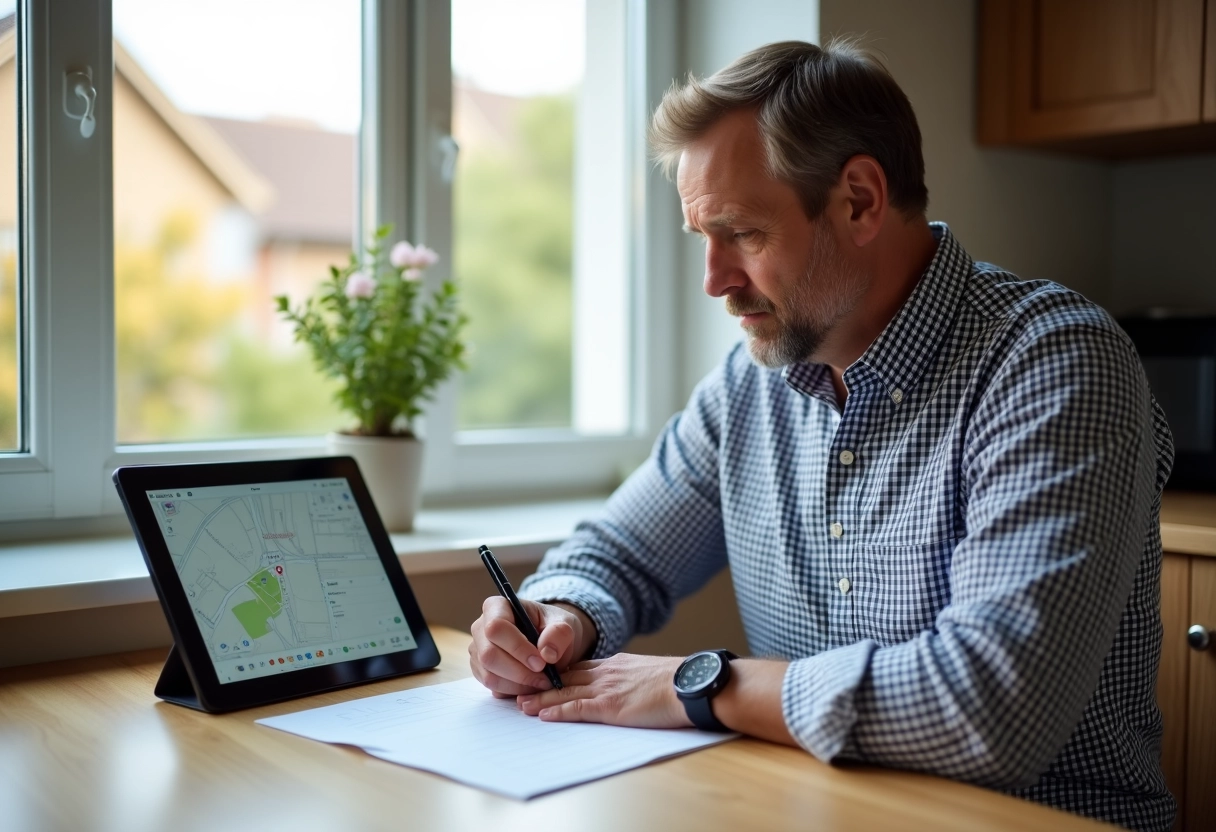
The legal limits and precautions to know before acting
Any search of this type involves adhering to a strict framework. The texts are clear: the GDPR imposes criteria for the collection, processing, and storage of personal data on everyone, both public and private. The CNIL pays particular attention to the application of these principles. Any deviation, abusive use, lack of consent, or misuse exposes one to legal or administrative sanctions.
French law protects privacy on two levels: civil and criminal. Revealing or retrieving data without authorization is not tolerated and requires a valid reason (litigation, notarial action, asset management…). The right to erasure, provided for by the Data Protection Act, also allows any person to disappear from a file if they wish.
Before engaging in this type of approach, it is essential to keep a few obvious precautions in mind:
- Always read the legal notices of the sites where you conduct your searches.
- Evaluate the reasons motivating this quest for information, and ensure they fall within the framework set by the law.
- Delete any collected information as soon as it is no longer useful for the purpose of your request.
Respecting privacy leaves no room for approximation. Using an archive, an official register, or an online database requires vigilance and a sense of responsibility. In case of abuse, the consequences can be significant, both in civil and criminal courts.
In this context where information circulates at the speed of a click, discovering who lives behind a door is rarely a daunting task. One immutable principle remains: act without ever sacrificing the delicate balance between knowledge and restraint. The art lies in this invisible boundary, where curiosity and respect for others constantly clash.