Piling clay balls at the bottom of a pot has never resolved the question of their fate. Discreet yet persistent, they accumulate in apartments like a mineral memory of past repottings. Non-compostable and rarely recycled, they pose a real puzzle for anyone looking to garden without wasting or polluting.
In the face of this paradox, new avenues are emerging to limit their impact without succumbing to the convenience of disposables. Inventive reuse, ecological diversion, and the choice of alternative materials: solutions are gaining ground, offering urban gardeners a range of concrete actions to break free from the deadlock.
Why do clay balls pose a problem in our indoor plants?
At first glance, clay balls seem ideal for promoting drainage. However, their widespread use in indoor plants is not without consequences. Placed at the bottom of pots, they can slow down water flow, sometimes turning the potting soil into a soggy sponge. This stagnation creates a favorable environment for root asphyxiation and opens the door to diseases like Phytophthora, a well-known threat to plant enthusiasts.
On the surface of the potting soil, clay balls, by retaining moisture, attract fungus gnats. These insects settle, lay eggs, and the fungus gnat larvae proliferate. The more moisture there is, the more intense the invasion becomes. The fragile balance of the domestic environment is disrupted, and the health of the plant suffers.
The question of how to get rid of clay balls arises regularly, especially in urban areas. Little integrated into green waste, they force a rethink of habits. Adapting material choices, dosing their use, or favoring other substrates can make all the difference in maintaining a healthy indoor ecosystem. Discussions around clay soil and natural alternatives are intensifying, with everyone seeking the most plant- and planet-friendly method.
What natural and ecological alternatives can replace clay balls?
It’s time to reconsider the role of clay balls in indoor plant pots. Other options, drawn from nature or recycling, ensure effective drainage without multiplying inert waste. Organic materials are at the heart of these alternatives.
Here are some wise solutions to consider for replacing clay balls:
- Pine or coconut bark: Available at garden centers or sourced from recycling biowaste, they promote water passage and integrate into the potting soil over time. Their fibrous structure protects roots and limits excess moisture, slowing the proliferation of fungus gnats.
- Gravel and sand: Installing a thin layer of gravel or sand, alone or in a mix, at the bottom of the pot prevents water stagnation. Coarse sand, in particular, maintains good aeration of the soil without disturbing the pH of the substrate.
- Perlite and vermiculite: These lightweight minerals, favored by ADEME for their neutrality, improve the structure of potting soil and stimulate root development. They fit into a sustainable approach that respects biological balance.
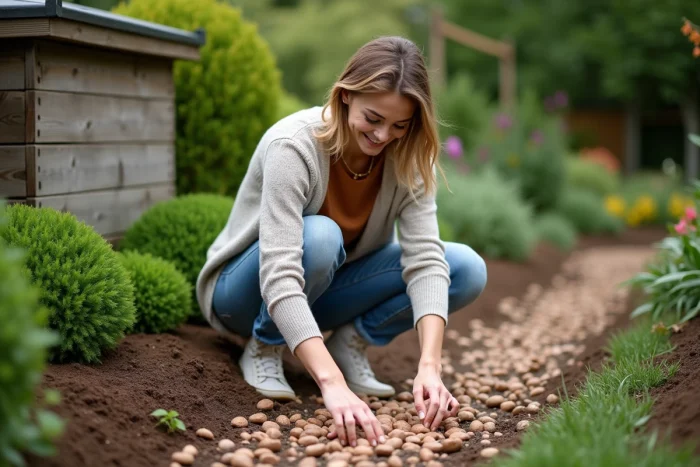
Additionally, crushed cork stoppers or recovered nut shells can serve as a bottom layer. These local and simple alternatives provide effective support for quality potting soil and respect the composition of French soils. Taking care of the substrate, prioritizing porosity, and avoiding non-degradable materials: this is the winning strategy for vigorous plants and a sustainable interior.
Concrete tips for sustainably eliminating fungus gnats without harming the environment
Fungus gnats multiply on the surface of the potting soil when moisture settles or ventilation is lacking. The goal is to stop the invasion without disrupting the substrate or jeopardizing the balance of the environment.
Adopting a precise watering management makes a difference. Testing moisture by hand or shaping a bit of soil will guide you: there’s no need to soak the clump, just let the surface dry between waterings. This simple gesture slows down egg-laying and blocks the development of fungus gnat larvae.
Among natural strategies, nematodes prove to be formidable. These tiny worms, harmless to the plant, target larvae in the soil and spread during light watering.
To limit adults, nothing is more effective than placing apple cider vinegar bowls next to the plants: the smell attracts them and allows you to trap them. A bit of diluted black soap sprayed on the potting soil or the edges of the pot is enough to disrupt their reproduction without altering the soil.
Finally, a repotting in quality potting soil, low in decomposing organic matter, will eliminate the problem at its root. Also, remember to regularly remove plant debris from the surface. Prevention rather than suffering: that’s the best defense against the appearance of fungus gnats in your pots.
There’s no need to endure the puzzle of clay balls or the invasion of fungus gnats. Changing course, testing new materials, refining your actions: this is how to transform a constraint into a lever for healthier plants and more peaceful interiors. The solutions are there, within reach. It’s up to everyone to let them sprout.