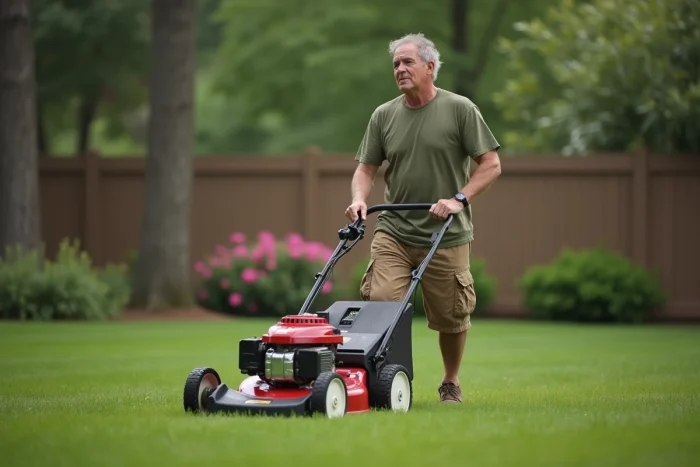
We’ve all experienced the situation: the lawn starts to look like a meadow, the weather forecast predicts rain for tomorrow, and we hesitate between taking out the mower now or waiting for it to dry. This timing choice is not trivial for the health of the grass. Knowing when to mow before or after the rain affects the quality of the cut, the state of the soil, and the grass’s resistance to diseases.
Wet grass and mower blade: what happens concretely
When mowing a wet lawn, the grass blades bend under the weight of the water instead of standing upright in front of the blade. The cut becomes uneven, with blades torn rather than cleanly cut. On both gas and electric mowers, wet grass sticks under the deck, forms clumps, and clogs the discharge chute.
These clumps of stuck grass then remain in patches on the lawn. They block light, retain moisture at ground level, and create a breeding ground for fungal diseases. Pathogenic fungi thrive under these conditions: residual heat, stagnant moisture, and compacted organic matter.
The question of mowing before or after the rain often boils down to avoiding this scenario. Mowing on dry grass, even the day before a shower, results in a clean cut that heals better.
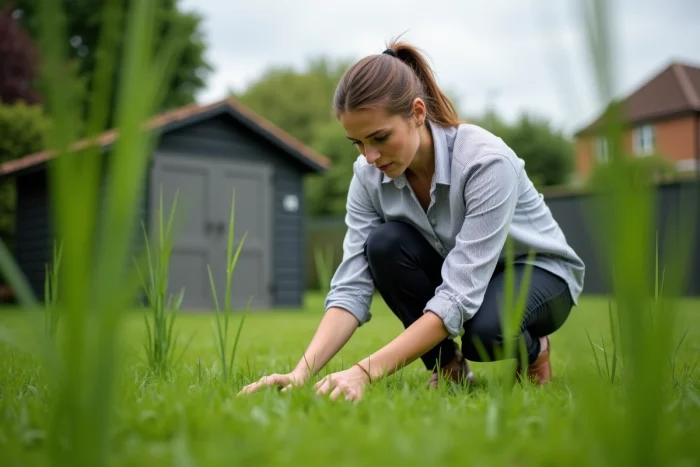
Mowing the lawn before the rain: advantages and limits
Mowing a few hours before a forecasted shower has a direct advantage: the grass is dry, and the cut is clean. The subsequent rain acts as a natural rinse, helping the mowing residues to disperse and reach the soil without forming a crust.
For mulching enthusiasts, this is the ideal scenario. Fine clippings decompose faster when they receive water shortly after cutting. Moisture accelerates the work of soil microorganisms, and the grass quickly benefits from this nitrogen input.
Be cautious during periods of water stress
During a heatwave, the logic partially reverses. Mowing just before the rain after a prolonged drought can stress already weakened grass. The cut opens wounds on the blades, and if the shower is short or insufficient, the grass loses water without recovering enough to heal.
Since the heatwaves of 2022-2023, agronomic extension services recommend not cutting more than one-third of the total height of the blade. If the grass has grown freely during a dry period, it is better to make two spaced passes rather than a close cut followed by light rain.
Mowing after the rain: the timing that changes everything
Mowing just after the rain, when the soil is still saturated with water, presents three concrete problems:
- The mower’s wheels sink into the soft soil and create ruts, especially on clayey terrain. These marks compact the soil and hinder rooting.
- Wet grass cuts poorly and clogs the machine. On a gas mower, the engine works harder, which accelerates blade wear.
- Wet residues form a mat on the ground that encourages the development of mosses and fungi in the following weeks.
The right reflex is to wait until the grass has dried on the surface. Depending on the type of soil and sunlight, this takes between a few hours and a full day. On well-draining soil (sandy or loamy), one can often mow again the next morning if the sun has done its job. On clayey soil, the returns vary, but counting at least one day remains prudent.
Mowing height and waterlogged grass
When mowing after the rain, raising the cutting height by one notch limits damage. Wet grass is longer than it appears (the blades straighten as they dry), so a cut that is too low risks scalping the lawn. This results in yellowed areas that take several weeks to green up again.
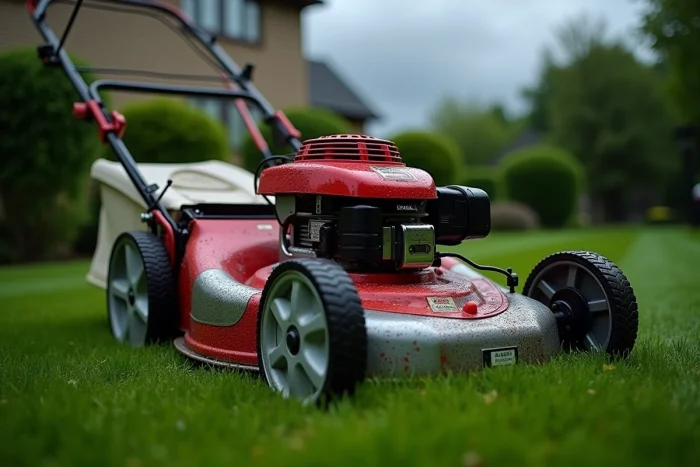
High biodiversity lawn and seasonal mowing: a different timing
For gardens managed with differentiated mowing (management “No Mow May” or flowering fallow), the relationship with rain changes. The Royal Horticultural Society recommends not mowing just before a rainy period in spring. Rain stimulates a rapid growth of grasses, which risks choking out the dicotyledons (clovers, daisies, plantains) if they have just been cut at the same time.
In this specific case, a follow-up mow after the rain, with a raised cutting height, helps contain the grasses without eliminating the spontaneous flowers. We mow less often, but we choose the timing better.
Robotic mowers and automated weather management
Robotic mowers change the game. Most recent models include a rain sensor that returns the device to its base when humidity exceeds a certain threshold. Mowing resumes automatically once the grass is sufficiently dry.
This operation through frequent micro-cuts reduces the problem: the robot only removes a minimal fraction of the height with each pass, which limits grass stress and the amount of residues. Mulching occurs naturally, without clumps of grass on the ground.
For a robot, the question of timing before or after the rain becomes secondary. The device adapts itself, provided the sensor is clean and properly calibrated.
The choice between mowing before or after the rain primarily depends on the state of the soil and grass at the moment the machine is taken out. On a standard lawn and well-draining soil, mowing the day before the rain on dry grass remains the best compromise. When the rain has already passed, patience and a raised cutting height make the difference between grass that recovers quickly and grass that yellows.