Paris boasts a density of leisure offerings that few European capitals can claim. Museums reopened after restoration, neighborhood workshops, inclusive sports activities, concept bars: the range has further expanded since 2024. The challenge is no longer finding something to do, but choosing from hundreds of proposals that refresh each season.
Inclusive leisure in Paris: a full cultural program
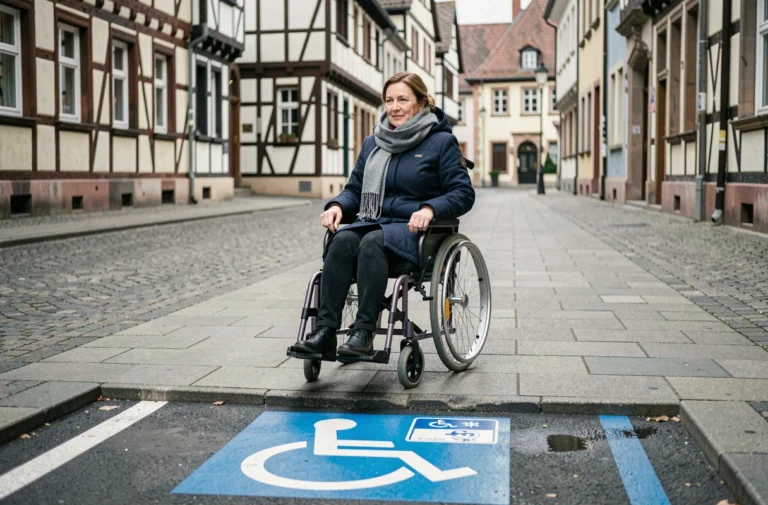
Accessibility is no longer just a logistical checkbox on a practical sheet. The first Parisian Fortnight of Accessibility and Inclusion, organized from September 19 to October 4, 2026, has transformed the subject into a true cultural program. Exhibitions, cinema, music, sports, workshops, and debates have spread across several locations in the capital.
The program is not limited to adapted visits. Sports disciplines such as boccia, wheelchair basketball, sled hockey, judo, archery, and dance were included in the calendar, supported by associations and clubs labeled as “para-welcoming.” This type of initiative opens doors to audiences that often remained on the fringes of traditional Parisian leisure.
For those who want to explore the Parisian leisure offerings from different angles, it is possible to access leisure on Faits sur Paris and filter according to their desires. Feedback from the field still varies on the sustainability of these events beyond the annual highlights, but the momentum has been initiated.
Workshops and immersive activities: what sets Paris apart from other capitals
Escape games and immersive quizzes have saturated the Parisian market in recent years. Several dozen establishments share clientele between the Marais, Bastille, and the grand boulevards. In contrast, it is in the realm of neighborhood creative workshops that the offerings are most renewed.
Ceramics, bookbinding, fermented cooking, custom perfumery: these short formats (two to three hours) attract both Parisians and visitors. They do not always appear on major booking platforms, making them harder to spot.
- Ceramics and pottery workshops have multiplied in the 10th, 11th, and 20th arrondissements, often led by independent artisans who open their spaces on weekends.
- Cooking classes focused on a specific product or technique (fermentation, Japanese pastry, fish cutting) are gradually replacing generalist formulas.
- Olfactory experiences, from perfume creation to guided tea tasting, occupy a niche that barely existed in Paris five years ago.
The common thread of these activities: they rely on know-how transmitted directly, not on a decor or a scenario. This distinguishes them from purely recreational formats.
Heritage and visits in Paris: the rebound post-2024
The Parisian cultural offering has seen a notable renewal after the 2024 Games, with the reopening of recently restored sites. According to the Ministry of Culture, summer attendance at heritage and cultural sites rebounded significantly in 2025, with 9.5 million entries in July and August, a 22% increase compared to summer 2024.
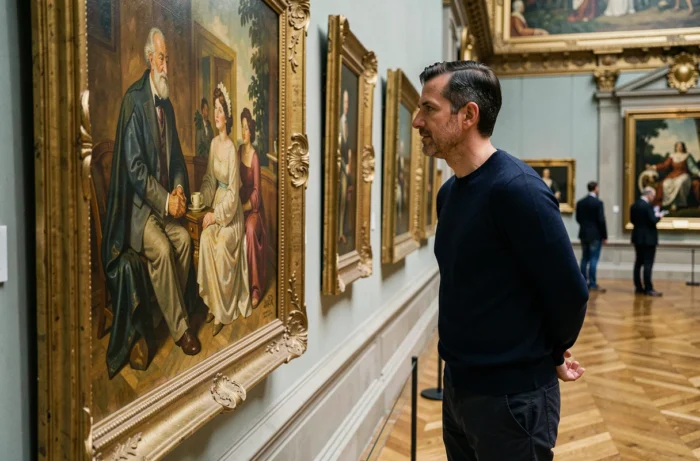
This figure does not only concern large museums. Secondary monuments, temporary exhibitions, and urban walking tours have also benefited from this momentum. The Petit Palais, whose permanent collections remain free to access, illustrates this trend well: a free, central museum that attracts without massive advertising campaigns.
The covered passages of the 2nd and 9th arrondissements, the gardens of the Palais-Royal, or the Petite Ceinture (an old railway converted into a green walkway) provide alternatives to classic tourist circuits. Heritage outings are no longer limited to large museums: they combine architecture, walks, and the discovery of evolving neighborhoods.
Concept bars and nightlife in Paris: beyond the counter
The Parisian bar has changed in nature. Themed establishments (signature cocktails, board game bars, natural wine bars with musical programming) have firmly established themselves in the landscape. This is no longer a passing trend.
Several trends emerge:
- Game bars, which offer hundreds of board game references with guidance, are concentrated in the 11th and 3rd arrondissements.
- Natural wine cellars with light dining have replaced some cocktail bars in the Ménilmontant and Oberkampf neighborhoods.
- Rooftops and ephemeral terraces, which open from April to October, are multiplying on building rooftops and in courtyards.
The average ticket for an evening in these places remains high. Paris remains an expensive capital for nightlife, and the available data do not suggest a decrease in prices despite increased competition among establishments.
Sports activities and outdoor fun in the heart of Paris
The Seine, the Bois de Boulogne and Vincennes, the canals: Paris has outdoor corridors often underutilized by visitors. Running along the pedestrianized quays has become a classic, but other practices are gaining ground.
Paddleboarding on the Ourcq Canal, yoga classes in municipal parks, and indoor climbing sessions (several facilities have opened in the northeast of Paris) diversify the offering. Free sports activities with open access have developed since the Olympic dynamic of 2024, although their sustainability depends on municipal budgets.
For families, renovated playgrounds in several arrondissements and urban educational farms (Bois de Vincennes, Parc de Bercy) offer outings without reservation or ticket. These are simple leisure activities, but their accessibility makes them valuable in a city where many activities require advance planning.
Paris is not short on leisure ideas. What is sometimes lacking is a readable overview of this fragmented offering between platforms, municipal sites, and neighborhood word-of-mouth. Recent initiatives, whether cultural, sporting, or inclusive, show that the capital continues to renew its proposals, season after season.